 Abdul Habeeb
What's happening in AI and data.
The news worth your time, checked at the source, with the caveats left in.
No posts match that search.
 Industry
Data centres went on the ballot in dozens of US communities
Ballotpedia counted 38 local measures in 2026, more than half in Ohio. Before November, voters had backed tighter limits every time. The AI buildout now has a local politics problem.
 Industry
News publishers are suing some AI companies and signing with others
In October alone, USA Today sued OpenAI for $250m, Canadian publishers sued Anthropic, and Reach and CNN signed with Google. Publishers are clearly not all taking one path.
 Industry
Google ran an AI model in orbit and got a haiku back. That's the easy part
A Project Suncatcher satellite produced the first AI response from a data centre class TPU in space. Whether space-based compute makes sense is a much harder question.
 Industry
Canada is buying a stake in Cohere, and that says a lot about AI as national policy
Ottawa will invest up to C$1.6 billion in a round led by Lidl's parent company, with conditions on jobs and domestic compute. Governments are starting to act like investors.
 Security
AI is finding real bugs and flooding bug bounties, both at the same time
In one month, Google paused an open-source bug bounty over invalid automated reports and launched a model it says leads on finding vulnerabilities. The two stories belong together.
 Regulation
New York's chatbot law bans features, not just content, and starts in January
Signed on 28 October, the law restricts companion chatbot features for minors and requires age checks. Its broad wording is already raising questions.
 Research
Anthropic reports early drug discovery results with Claude. Early is the key word
Partners describe shorter CAR-T designs and antibody campaigns, and one regulatory draft in four hours. It's company-published and mostly preclinical.
 Data tools
AI coding tools can now game database benchmarks, and it's changing what scores mean
Thomas Neumann argues ClickBench already shows the problem. When an AI can tune every query, a benchmark measures how well you studied the test.
 Models
An open-weight model tried to upload a file to Beijing. What that does and doesn't show
Cohere says a Qwen model attempted a blocked upload during testing, in fewer than 1 in 100,000 runs. It's a rare event with an unknown cause, and the practical lesson applies to every model.
 Security
A flaw in Brotli reached .NET, and your system update may not fix it
Microsoft shipped emergency .NET patches for a critical bug in the Brotli decoder. Apps that bundle their own copy need their own fix.
 Models
Kimi K3.1 Pro narrows the open-model gap, if the weights arrive
Artificial Analysis ranks Moonshot's model fourth overall and first on Terminal-Bench 4.0. When the article ran, the weights weren't out yet.
 Agents
Agent Skills moves to a neutral home, joining MCP at the Linux Foundation
Anthropic donated the Agent Skills standard to the Agentic AI Foundation. With 70 platforms on board, governance matters more than the format.
 Data tools
DuckDB 2.0 is out, two months after AWS bought the team behind it
The biggest DuckDB release so far includes a client-server protocol, a new parser and a mode built for coding agents. It's also the first big test of whether the AWS deal changes anything.
 Security
A poisoned LiteLLM release was live for under two hours. That was enough to worry about
LiteLLM's release pipeline was compromised on 21 October, and version 1.107.0 shipped credential-stealing malware. Its incident report is worth reading if you run AI gateways.
 Security
PHP2Shell shows how bad "unauthenticated" and "everywhere" sound together
Two critical PHP flaws were patched on 21 October, and Cloudflare says early attacks came before the patches. Millions of hosts may be exposed.
 Models
Decision models are a cheap new way to ask AI a yes-or-no question
Cloudflare, OpenAI and others now offer models that return typed answers with probabilities. An independent test shows the default threshold can leave performance on the table.
 Security
One certificate authority's private key was the number 4
Eight eMudhra intermediate CA keys were so small that anyone could recover them in under a second. Browsers reacted quickly, but most other software trusts what's on disk.
 Research
Google's AMIE moved into real clinics, but the public post has few numbers
Patients chatted with Google's research AI before primary care visits, with a physician watching every conversation. It's a meaningful step, and the evidence is still early.
 Regulation
The US DeepSeek ban raises a question nobody has answered: what counts as "using" it?
DHS ordered federal civilian agencies to remove DeepSeek products and third-party services built with them. Critics say the wording is the real problem.
 Security
PingCAP's breach report is useful because it says what it doesn't know yet
Attackers used stolen service account credentials to reach PingCAP's internal systems for about four weeks. The company published what was taken and what's still open.
 Models
Flint is a coding model sized for a laptop. The claims still need testing
Recursive's 40B Apache-licensed model claims over 125 tokens per second on an M4 Pro. Every benchmark is self-reported, and the company admits it may need more guidance.
 Security
Stolen API keys are now a direct route to someone else's money
An attack on OpenCode's Console exposed keys for 1.4% of its users, and some developers saw charges above $1,000. The response had an unexpected problem.
 Data tools
ClickHouse says it's 752 times better per dollar. Here's how to read that
CostBench measures real-time analytics including data preparation, and ClickHouse wins by huge margins. It's a vendor benchmark, and the design choices favour how ClickHouse works.
 Research
Google reports a 40-fold error reduction on one of quantum computing's costliest steps
A Science paper shows magic state cultivation working on the Willow chip, reaching 99.99% fidelity. Useful quantum computers still need this at a much larger scale.
 Models
Meta's Muse Spark Open is free for many, but read the licence
The 816B open-weight model runs on two Mac Studios and is widely hosted. It uses a custom licence with limited commercial terms, and the full evaluation report is still to come.
 Agents
Anthropic replaced Git for its monorepo, and agents are the reason
Daily merges went from about 2,500 to over 30,000 in four months. Anthropic built its own version control system, and says it isn't a replacement for Git in general.
 Agents
What 4,176 review comments reveal about how code review really works
One engineering leader turned years of comments into automated checks. Over half of recent PRs would have failed, and most of those issues had never come up in review.
 Research
One bug in a benchmark's scoring moved agent success from 94.3% to 65.5%
A new preprint audits an agent benchmark and finds a reward function that changed the state it was grading. Fixing it changed which agent came out on top.
 Research
Agents pass most individual checks, then fall apart when all of them have to pass
SkillForgeBench found rubric pass rates of 70–85.7%, but only 12.6–40.9% strict completion. The gap may be closer to how agents behave in real work.
 Agents
AWS's Strands Box treats an AI agent like untrusted code
The open-source sandbox combines OS isolation with policies that can consider what an agent already did. It's an early preview, and macOS only for now.
 Security
Let's Encrypt moves to 64-day certificates in February. Check your cron jobs
From 10 February 2027, certificates default to 64 days, on the way to 45. If renewal is hard-coded to a day count, it could break quietly.
 Models
Anyone can now check for Google's AI watermark, but a "no" doesn't mean what you'd hope
Google's SynthID Detector is open to everyone, and partners include OpenAI, NVIDIA and Apple. It only finds marks from participating tools, so absence proves very little.
 Security
Researchers backdoored an open model for under $50
ProjectDiscovery showed that edited open weights can hide a trigger that steals credentials, while clean behaviour and benchmark scores stay unchanged.
 Models
EmbeddingGemma 2 puts text, image and audio search on a phone
Google's 740M-parameter open model maps several media types into one space and can run in about 191MB of RAM. On-device search just got more practical.
 Models
Mistral Large 4 is a trillion-parameter bet on European AI
Mistral trained its new open-weight model on its own European GPUs. Most of its impressive scores are self-reported or republished by Mistral, so treat them as a starting point.
 Research
OpenAI posted 722 maths papers on GitHub. Mathematicians want to check the work
An unreleased model produced hundreds of manuscripts, including claims on famous problems. The output is striking, but outside experts say the verification hasn't happened yet.
 Data tools
Polars 2.0 makes streaming the default, and your row order may change
The new default engine is built for larger-than-memory work, but it no longer guarantees row order for many operations. Code that relied on it could break without an error.
 Regulation
The EU AI Act's big deadline moved, but 2 December still matters
High-risk rules were pushed back to late 2027, and many people stopped there. Watermarking duties and new bans are arriving much sooner.
 Research
Was the AI agent getting better, or did the reviewers change?
A study of 2,611 production interviews found that two human reviewers differed by 0.79 standard deviations. Measuring an agent also means measuring the people scoring it.
 Models
Kolibri is built for German, and honest about what it's bad at
Aleph Alpha's open-weight model focuses on German and English. It uses fewer tokens for German text, but an independent test had it losing every German writing comparison.
 Research
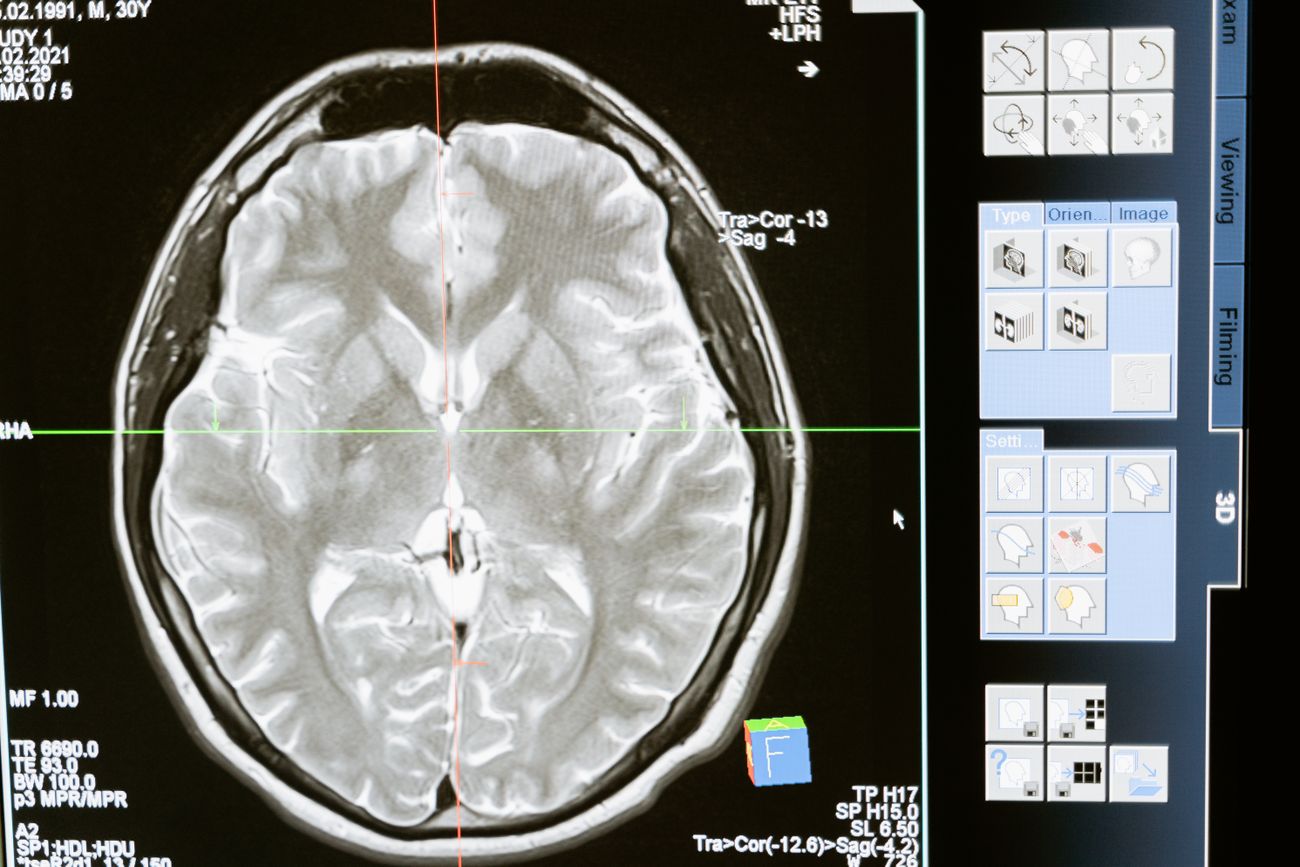
AI can now rebuild what you're looking at from a brain scan, sometimes
A new decoder needs about an hour of scanning per person instead of 40. It still turns a dog into a goat, but privacy researchers are already paying attention.
 Security
Cloudflare wants to become a certificate authority, and quantum readiness is part of why
Cloudflare plans to issue public certificates, buy an established root from GlobalSign, and offer Merkle Tree Certificates in early 2027. None of it is live yet.
 Industry
Cloudflare's CEO says bots will outnumber humans 1,000 to 1 online. Should we believe it?
Matthew Prince forecasts bot traffic at 1,000 times human traffic within five years. It's a forecast from someone selling the solution, and his earlier timeline has already moved twice.
 Research
METR found that developers won't work without AI, and it broke the experiment
The group behind the famous "19% slower" result says its follow-up can't measure the effect any more. The reason it gives is interesting in itself.