 ← All posts

This post is written in English.
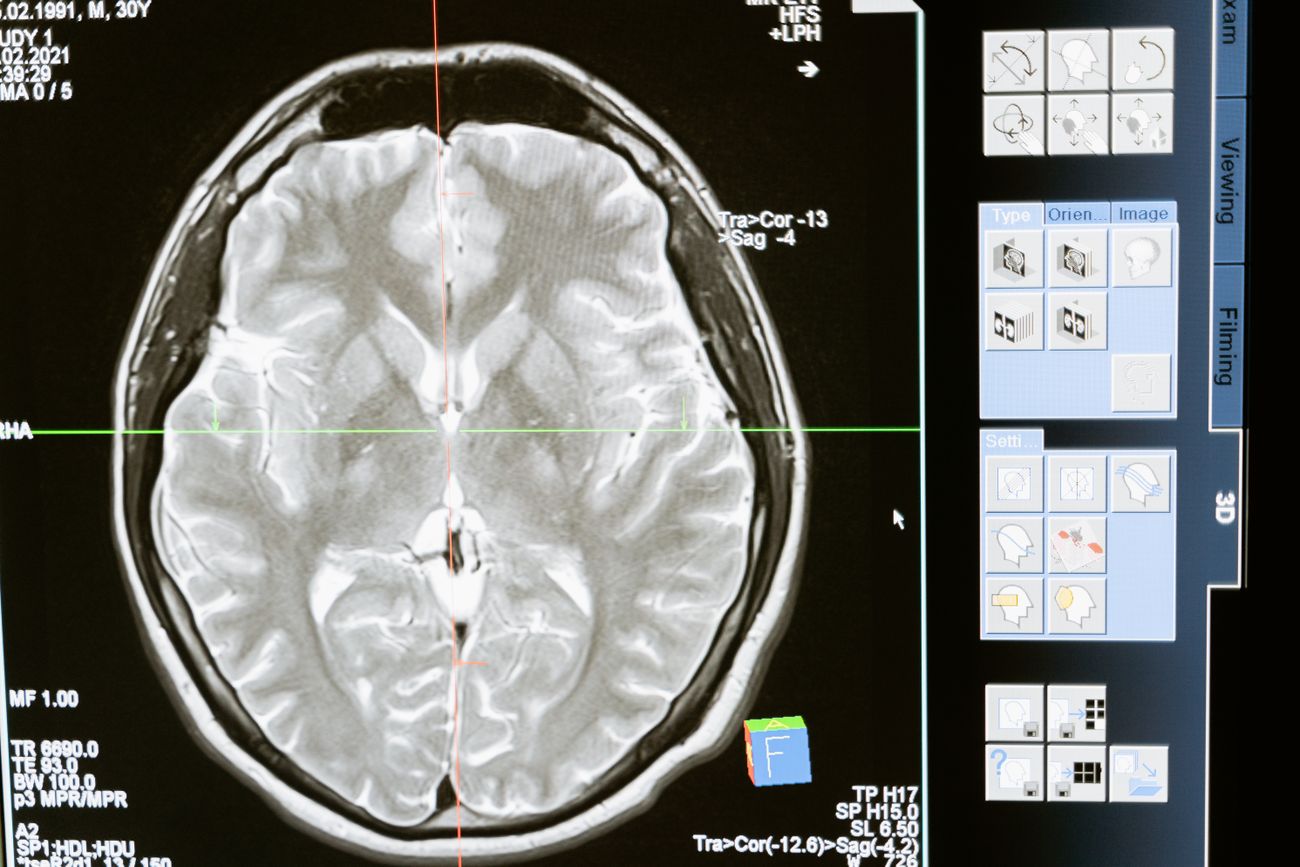
MIT Technology Review reports on work by Michal Irani and colleagues at the Weizmann Institute, who reconstruct images people are viewing from functional MRI scans.
How it works
The decoder has two branches, one predicting an image's structure and another its content, and a diffusion model then generates the picture. A separate encoder predicts brain activity from images, and the two are trained together. Around 70% of the training data comes from images never paired with scans.
The big efficiency gain is that a new person needs about one hour of scan data, where other tools reportedly need about 40.
How good is it?
Irani says it "outperformed the others by a significant margin" in one comparison. It also still fails: a cake became three sandwiches, and a dog in a bathtub became a goat in a bathtub. The work covers images only, and video, audio, thoughts and dreams are things Irani says the field can't yet do.
It also needs someone lying still inside an MRI machine, usually cooperating, so nobody is reading minds on the street.
The worry
Researchers quoted in the piece raise fair concerns. Marcello Ienca says versions based on EEG could be a "game changer" and suggests courts might one day see reconstructed images as evidence. EEG devices are much cheaper and more portable than MRI, which is why that's the part to watch. Irani says she isn't concerned for now.
My read
Today's limits are real, and overhyping this would be easy. But the drop from 40 hours to one is the kind of progress that makes planning ahead sensible. Brain data feels like exactly the sort of thing where rules should exist before the technology works well, not after.